Electrical Conduits: The Backbone of Safe and Efficient Electrical Systems
Electrical conduits are critical components of modern electrical infrastructure, providing protection, routing, and support for electrical wiring. They are used in residential, commercial, and industrial installations to safeguard wires against physical damage, moisture, chemicals, and other environmental hazards, while ensuring compliance with safety regulations. As the demand for reliable electrical systems grows across smart cities, industrial facilities, and renewable energy projects, electrical conduits have become an essential element in both construction and retrofitting projects.
This article provides a detailed exploration of electrical conduits, including their definition, types, key insights, technology use, current trends, consumer preferences, competitive landscape, sustainability practices, and future developments.
Understanding Electrical Conduits
An electrical conduit is a tube or protective pathway that encases electrical wiring. Its primary functions are to protect wires from physical and environmental damage, organize electrical systems, and ensure safety against fire and electrical hazards. Conduits are designed to be durable, fire-resistant, and suitable for a variety of applications, from indoor residential wiring to industrial and outdoor installations.
Electrical conduits serve several critical purposes:
-
Protection: Shields wires from mechanical impact, moisture, corrosion, and rodents.
-
Safety: Reduces the risk of electrical shock, short circuits, and fire hazards.
-
Organization: Keeps wiring organized, especially in large or complex installations.
-
Compliance: Ensures adherence to building codes, electrical standards, and regulations.
-
Ease of Maintenance: Allows easy replacement, addition, or rerouting of wires without extensive structural modifications.
Types of Electrical Conduits
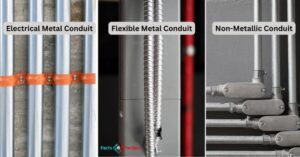
Electrical conduits are categorized based on the material, application, and installation requirements:
1. Metallic Conduits
-
Rigid Metal Conduit (RMC): Heavy-duty, made of galvanized steel or aluminum, ideal for industrial and outdoor applications.
-
Intermediate Metal Conduit (IMC): Lighter than RMC but strong, used in commercial and industrial projects.
-
Electrical Metallic Tubing (EMT): Lightweight, commonly used for indoor commercial wiring.
2. Non-Metallic Conduits
-
PVC Conduits: Lightweight, corrosion-resistant, and suitable for wet or underground applications.
-
Flexible Non-Metallic Conduits: Ideal for installations requiring bends or vibrations.
3. Flexible Conduits
-
Flexible Metal Conduit (FMC): Provides flexibility for short runs or areas with complex wiring routes.
-
Liquid-Tight Flexible Metal Conduit (LFMC): Sealed for moisture resistance in wet or outdoor environments.
Key Insights into Electrical Conduits
-
Durability and Safety: Metal conduits are preferred for high-risk areas due to impact resistance, while PVC offers corrosion resistance for wet environments.
-
Ease of Installation: Lightweight and flexible conduits reduce labor costs and installation time.
-
Regulatory Compliance: Proper conduit selection ensures adherence to local electrical codes and international standards.
-
Integration with Modern Systems: Conduits are increasingly designed to accommodate fiber optics, data cabling, and smart building infrastructure.
Technology Use in Electrical Conduits
Modern electrical conduit systems incorporate advanced manufacturing, materials, and monitoring technologies:
-
Material Innovation: Improved polymers, corrosion-resistant metals, and composite materials increase lifespan and reliability.
-
Prefabricated Systems: Pre-cut and pre-bent conduits simplify installation and reduce project time.
-
Smart Conduit Systems: Conduits integrated with sensors for monitoring temperature, moisture, or physical damage in critical applications.
-
BIM Integration: Conduits are being designed and planned using Building Information Modeling (BIM) for better accuracy in large-scale construction.
Current Trends in Electrical Conduits
-
Rising Adoption of Non-Metallic Conduits: PVC and other non-metallic materials are favored in corrosion-prone or cost-sensitive projects.
-
Integration with Smart Infrastructure: Conduits are increasingly part of smart grids, IoT networks, and modern communication systems.
-
Prefabrication and Modular Systems: Prefabricated conduit assemblies improve installation efficiency and reduce construction delays.
-
Green Building Practices: Electrical conduits are selected for durability and environmental compliance in sustainable construction projects.
-
Underground and Industrial Applications: Growth in infrastructure and industrial facilities drives demand for robust conduit systems.
Consumer Preferences
-
Safety and Compliance: Consumers prioritize conduits that meet electrical codes and reduce fire risk.
-
Durability and Longevity: Long-term reliability in industrial, residential, and commercial installations.
-
Ease of Installation: Lightweight and flexible conduits are preferred for efficiency.
-
Cost Efficiency: Value-for-money products without compromising safety or quality.
-
Compatibility: Ability to accommodate electrical, data, and communication cables.
Competitive Landscape
The electrical conduit market is competitive, with manufacturers offering a range of materials, sizes, and specialized solutions. Companies compete based on product quality, certifications, innovation, and distribution networks.
Key Market Players
-
Southwire Company – Offers a wide range of metallic and non-metallic conduit solutions for industrial and residential applications.
-
Anamet Electrical, Inc. – Specializes in flexible metallic and rigid conduits for commercial and industrial wiring.
-
Legrand SA – Provides comprehensive electrical installation solutions, including conduits and accessories for smart buildings.
-
Thomas & Betts (ABB Group) – Supplies high-quality rigid and flexible conduits for diverse electrical projects.
-
Hubbell Incorporated – Offers conduits and fittings for commercial, industrial, and utility installations.
-
Prysmian Group – Known for integrating conduits with power and fiber optic cabling solutions.
-
Polycab India – Manufactures PVC conduits and accessories for residential and commercial use.
-
Finolex Cables – Supplies cost-effective PVC conduits and systems for urban and rural projects.
-
Kabelschlepp – Specializes in conduit systems for industrial automation and energy applications.
-
Nexans Group – Provides advanced conduit systems for industrial, utility, and data infrastructure.
Sustainability in Electrical Conduits
-
Eco-friendly Materials: PVC and composite conduits are being manufactured with recyclable materials.
-
Durable Systems Reduce Waste: Longer-lasting conduits reduce replacement frequency.
-
Energy-Efficient Manufacturing: Production processes are being optimized to minimize energy use.
-
Safe Disposal Practices: Recyclable conduit systems are gaining popularity to reduce landfill impact.
Challenges in Electrical Conduits
-
High upfront cost for premium metallic conduits in certain applications.
-
There is a need for skilled labor for proper installation, especially in industrial environments.
-
Compliance with evolving electrical codes across regions.
-
Balancing cost, durability, and environmental impact for large-scale projects.
Future Outlook
The electrical conduit market is poised for growth due to:
-
Expansion of residential, commercial, and industrial construction.
-
Increasing demand for renewable energy and smart infrastructure requires advanced conduit systems.
-
Rising adoption of modular, prefabricated, and flexible conduits.
-
Integration with IoT, smart buildings, and modern communication networks.
-
Growth in sustainable construction practices, emphasizing durable and recyclable conduit solutions.
Conclusion
Electrical conduits are fundamental to safe, efficient, and organized electrical systems. From protecting wires to enabling complex industrial and smart building installations, conduits ensure reliability, safety, and compliance.
With ongoing innovations in materials, technology integration, and sustainability, electrical conduits will continue to play a vital role in modern infrastructure, supporting residential, commercial, and industrial energy needs while adapting to emerging trends in construction, smart grids, and renewable energy integration.