Landfill Gas to Energy (LFGTE) Systems: Turning Waste into Renewable Power
As the world seeks sustainable solutions to the growing energy demand and environmental challenges, Landfill Gas to Energy (LFGTE) systems have emerged as a critical technology. By capturing and utilizing methane emissions from landfills, LFGTE systems convert waste byproducts into a renewable source of energy, simultaneously reducing greenhouse gas emissions and contributing to energy security. This article provides a comprehensive exploration of LFGTE systems — including their definition, operational principles, technological advancements, market trends, regulatory environment, sustainability impact, and future outlook.
What Are LFGTE Systems? Definition and Concept
Landfill Gas to Energy (LFGTE) systems are designed to capture methane-rich gas produced by the decomposition of organic waste in landfills and convert it into usable energy in the form of electricity, heat, or renewable natural gas. Landfill gas typically consists of approximately 50-60% methane and 40-50% carbon dioxide, with trace amounts of other gases. Methane is a potent greenhouse gas, roughly 28-36 times more effective at trapping heat in the atmosphere than carbon dioxide over a 100-year period. By harnessing methane for energy, LFGTE systems offer both environmental and economic benefits.
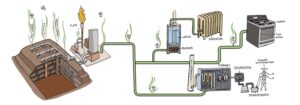
The basic concept involves collecting landfill gas through a network of wells and piping systems, removing impurities and moisture, and then utilizing the cleaned gas to fuel generators, turbines, or boilers. This process not only prevents uncontrolled methane release but also provides a renewable source of energy.
How LFGTE Systems Work
The operation of a typical LFGTE system can be broken down into several steps:
-
Gas Collection:
Vertical or horizontal wells are installed throughout the landfill to collect gas. A vacuum system draws the gas into a central collection network, preventing leakage into the atmosphere. -
Gas Treatment:
Collected gas contains moisture, siloxanes, hydrogen sulfide, and other impurities that can damage engines or turbines. Treatment systems, including filters, scrubbers, and condensate traps, clean the gas before it is used for energy production. -
Energy Conversion:
There are multiple options for converting landfill gas into energy:-
Electricity generation: Landfill gas powers internal combustion engines, gas turbines, or microturbines to produce electricity for the grid.
-
Direct use for heat: Gas can be burned in boilers or industrial furnaces to provide heat for nearby facilities.
-
Renewable natural gas (RNG): Methane is purified to pipeline-quality gas and injected into the natural gas grid or used as vehicle fuel.
-
-
Monitoring and Control:
LFGTE systems are equipped with monitoring equipment to measure gas flow, methane concentration, and system performance, ensuring safety and maximizing efficiency.
Key Technologies in LFGTE Systems
Gas Collection Systems
Modern LFGTE systems utilize optimized well designs, including vertical, horizontal, and trench wells, depending on landfill size and composition. Automated flow controllers and vacuum systems help maintain consistent gas collection, reduce leakage, and enhance overall system efficiency.
Gas Treatment and Cleaning
Advanced gas treatment technologies include:
-
Moisture removal systems to prevent corrosion and freezing.
-
Hydrogen sulfide scrubbers to remove sulfur compounds that can corrode engines.
-
Siloxane removal systems to prevent silicon deposits that damage turbines.
These innovations extend the lifespan of generators and improve energy conversion efficiency.
Energy Conversion Technologies
LFGTE systems employ several energy conversion methods:
-
Internal combustion engines: The most common method, producing electricity for on-site use or grid injection.
-
Microturbines and gas turbines: Efficient for larger-scale operations with higher gas flow.
-
Boilers for heat production: Provide industrial or district heating.
-
Upgrading to RNG: Advanced purification systems compress and treat methane for pipeline injection or use as vehicle fuel.
Current Trends and Market Insights
Global Adoption
LFGTE projects are increasingly deployed worldwide, particularly in regions with high landfill volumes and strong renewable energy policies. North America and Europe lead in the number of operational projects, while Asia-Pacific and Latin America are witnessing rapid growth due to urbanization and rising energy demand.
Integration with Renewable Energy Portfolios
Many energy utilities and municipalities are incorporating LFGTE into broader renewable energy strategies. By diversifying energy sources, LFGTE systems contribute to reducing reliance on fossil fuels and help meet renewable energy targets.
Hybrid Systems
Integration with solar, wind, and biomass systems is emerging as a trend. Hybrid renewable energy projects utilize LFGTE to provide a baseline energy supply, complementing intermittent sources like solar and wind.
Technological Innovation
-
Remote monitoring and automation: Modern LFGTE systems employ sensors and IoT-enabled devices for real-time monitoring of gas production and system health.
-
Enhanced gas recovery: Techniques like vacuum optimization, horizontal collector installation, and improved landfill cover materials increase methane capture rates.
Environmental and Sustainability Impact
LFGTE systems offer multiple sustainability benefits:
-
Greenhouse Gas Reduction: By capturing methane, LFGTE prevents the emission of a gas with high global warming potential.
-
Waste Management Synergy: Encourages proper landfill design and management practices.
-
Renewable Energy Production: Converts waste into a reliable, low-carbon energy source, supporting energy transition goals.
By addressing both waste management and energy production, LFGTE systems align with circular economy principles, turning environmental liabilities into economic assets.
Regulatory and Policy Landscape
Government regulations and incentives play a crucial role in promoting LFGTE projects:
-
Renewable energy credits (RECs): Provide financial incentives for producing energy from renewable sources.
-
Carbon credits and emissions trading: Methane captured and used for energy can be monetized as a carbon offset.
-
Environmental compliance mandates: Regulations require the mitigation of landfill methane emissions, making LFGTE implementation a practical solution.
Supportive policies significantly enhance the financial viability of LFGTE systems, encouraging further adoption.
Economic Considerations
LFGTE systems offer multiple revenue streams:
-
Sale of electricity to the grid.
-
On-site energy usage to reduce operational costs.
-
Sale of Renewable Natural Gas (RNG) to utilities or vehicle fleets.
-
Carbon credits for greenhouse gas reduction.
However, initial capital costs, maintenance, and site-specific factors such as landfill size, waste composition, and gas production rates affect project feasibility.
Competitive Landscape
The LFGTE market comprises energy companies, engineering firms, and landfill operators offering turnkey solutions. Leading providers focus on:
-
Designing and installing gas collection and treatment infrastructure.
-
Integrating gas-to-energy conversion technologies.
-
Offering long-term operation and maintenance services.
Competition emphasizes project efficiency, technology reliability, and regulatory compliance, with companies differentiating themselves through innovation and the ability to deliver turnkey renewable energy projects.
Future Outlook
The future of LFGTE systems is closely tied to global energy transition and waste management trends:
-
Increased adoption in emerging markets: Rapid urbanization and landfill expansion drive demand for methane recovery solutions.
-
Integration with smart grid and energy storage systems: LFGTE can provide steady baseload power in hybrid renewable systems.
-
Advances in RNG technologies: Upgrading landfill gas for pipeline injection or transportation fuel will expand revenue potential.
-
Policy-driven growth: Stricter methane emission regulations and climate policies will accelerate LFGTE deployment.
With continuous technological improvements, LFGTE systems are expected to remain a cornerstone of sustainable waste-to-energy initiatives.
Conclusion
Landfill Gas to Energy (LFGTE) systems represent a win-win solution for energy generation and environmental protection. By capturing methane emissions and converting them into electricity, heat, or renewable natural gas, LFGTE projects reduce greenhouse gas emissions, provide a renewable energy source, and improve waste management practices. As technology advances, policy frameworks evolve, and sustainability becomes increasingly central to energy planning, LFGTE systems are poised to play a significant role in the global transition toward cleaner, more resilient energy systems.
The integration of advanced gas collection, treatment, and energy conversion technologies, combined with regulatory support and economic incentives, ensures that LFGTE will continue to be an attractive solution for municipalities, utilities, and private enterprises aiming to transform waste into a valuable resource.
Read More:
https://www.linkedin.com/pulse/2035-latest-report-global-smart-sprinkler-controller-market-ouquf
https://www.linkedin.com/pulse/25-cagr-global-vegan-protein-bars-market-size-share-expand-5o7of
https://www.linkedin.com/pulse/global-aerospace-forging-market-size-reach-usd-2550-billion-bmlvf
https://www.linkedin.com/pulse/global-molding-compounds-market-size-surpass-usd-2471-billion-j4fwf
https://www.linkedin.com/pulse/latest-report-artificial-intelligence-ai-oil-jdtbc
https://www.zionmarketresearch.com/report/india-data-center-market
https://www.zionmarketresearch.com/report/functional-service-providers-market
https://www.zionmarketresearch.com/report/unified-communications-as-a-service-ucaas-market
https://www.zionmarketresearch.com/report/north-america-third-party-logistics-market
https://fnfnewsblog.com/2855/neurocosmetics-the-science-driven-future-of-skin-and-mind-wellness/